If you have ADHD, there's a good chance you've spent years trying to figure it out on your own. Maybe you've bought the planners, read the books, stayed up way too late scrolling ADHD videos, and wondering why everyone else seems to find this easier.
This October, we want to say something really clearly: You were never supposed to do this alone.
What is ADHD Awareness Month?
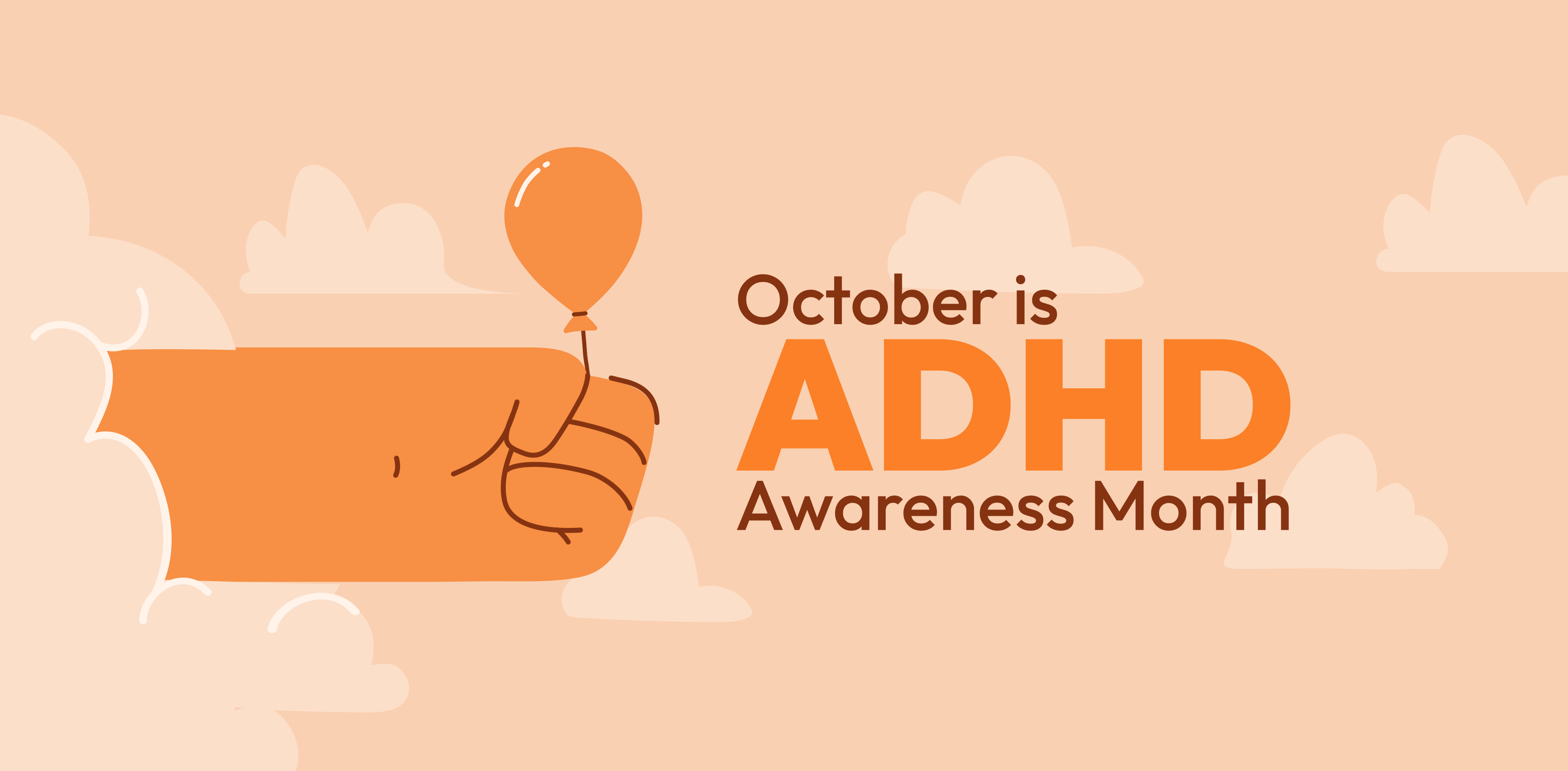
ADHD Awareness Month is a month-long effort to help more people understand ADHD. It's about sharing accurate information, pushing back on stigma, and helping people with ADHD (and the people who love them) find the support they need.
In the US, the month is led by the ADHD Awareness Month Coalition, which is made up of three organizations: CHADD (Children and Adults with Attention-Deficit/Hyperactivity Disorder), ADDA (the Attention Deficit Disorder Association), and the ACO (the ADHD Coaches Organization). Organizations in other countries, like CADDAC in Canada, celebrate in October too.
When is ADHD Awareness Month 2026?
ADHD Awareness Month runs from October 1 to October 31, 2026.
What's the ADHD Awareness Month 2026 theme?
This year's theme from the Coalition is A Community of Support. It's all about the people and resources that help us thrive with ADHD, from family and friends to doctors, coaches, educators, employers, and other people who get it.
What color is ADHD Awareness Month?
Orange! If you want to show up for the month, wearing orange is an easy way to start a conversation.
Why does ADHD Awareness Month matter?
ADHD is still really misunderstood, sometimes even by healthcare providers. Lots of people don't find out they have ADHD until adulthood, especially women and people of color, who are often missed because they don't fit the old stereotype of what ADHD "looks like." And even after diagnosis, many people struggle to find support that actually fits their lives.
Awareness months help change that. They make it easier to talk about ADHD openly, share what works, and find each other.
Did you know? ADHD Awareness Month started as a single day. The US Senate recognized the first ADHD Awareness Day in 2004, and it has since grown into a full month.
Why support matters so much with ADHD
ADHD doesn't stay in one part of your life. It affects how you sleep and eat, how you focus and feel, and how things go with your partner, your kids, your friends, and your boss.
There's a name for this. It's called the biopsychosocial model, and psychiatrist George Engel first described it in 1977. The idea is that your health is shaped by your biology, your psychology, and your social world, all at once. We just call it body, mind, and people.
- Body: diagnosis, medication, sleep, food, and movement
- Mind: skills, habits, emotions, and how you see yourself
- People: your relationships, your community, and the places you live and work
ADHD care guidelines reflect this too. They generally recommend combining approaches, like medication alongside education and skills support, instead of relying on one thing alone.
The tricky part is that most of us only ever get one or two of those pieces. Maybe you have a prescription but nobody to help you build habits. Or a stack of books but nobody in your life who understands. Support tends to work best when all three are covered.
And the people part matters more than most of us realize. Dr. Russell Barkley, one of the best-known ADHD researchers, has talked for years about the "point of performance." ADHD support tends to work best right where life is happening, rather than in a weekly appointment or a book you read once. That's exactly where people come in. A friend body doubling with you while you finally do your taxes. A coach helping you plan the week you're really having. A group of people who say "same" when you share the thing you thought only you struggled with.
How Shimmer is celebrating: #ShimmerTogether
At our ADHD Growth Summit this August, Dr. Alan Graham said something that stuck with me:
"Most people are more than willing to give help. But what's interesting is that most people are afraid to ask for help."
So this October, we want to give you permission to ask for support without feeling ashamed about it. We also want to help you get clear on what kinds of support are out there, and connect you with people who can be part of your circle.
Here's what we have planned for you:
📧 Get 31 Days of Support to your inbox. Every day in October, we'll e-mail you one idea from an ADHD expert and one small thing you can try that day. We start with the body, then move to the mind, then the people in your life. Sign up for our Brainwaves Podcast newsletter to get access.
🎤 Join us for two free lived experience panels
- Late Dx ADHD: The Support We Wish We'd Found Sooner with Dr. Panicha McGuire and Patrick Casale, October 7 at 1pm PT. Sign up here.
- From Girlhood to Menopause: ADHD & Women Across the Lifespan with Dra. Norma Echavarría, Lucía Miri Echavarría, and Cherry Kostrewa, October 14 at 1pm PT. Sign up here.
📱 Watch our Fav Insights from our Creator & Expert Partners. All month on Instagram, we're sharing highlights from our creator and expert partners: from sleep and nutrition to medication, relationships, and work. The full session recordings live in the Shimmer community. Our IG is here.
👩⚕️ Find diagnosis and treatment. Getting assessed as an adult can be exhausting, so after vetting several organizations, we’ve picked a leading organization in US and a leading organization in Canada to partner with, to make it easier for you to find quality care. Stay tuned this month as we share more information.
How you can celebrate
Map your support circle. Take two minutes and jot down an answer for each one.
- Body: Who is in my medical support circle - a doctor, a prescriber, anyone? Who or what supports me with fitness, nutrition, and sleep?
- Mind: Who or what helps me build skills and get through the hard days?
- People: Who in my life actually gets it, and where could I find more people like that?
It's okay if some of those are "no one yet." That's really common, and this month is a good time to start filling them in.
Share your story. One of the best ways to fight stigma is to talk about your own experience, whether that's a post, a video, or one honest conversation with a friend. If you post, tag us and use #ShimmerTogether so we can cheer you on.
Ask for one thing. Text a friend to body double with you, ask your partner for a reminder, or book the appointment you've been putting off. Small asks count.
Support ADHD organizations. CHADD, ADDA, the ACO, and CADDAC all do important work for the ADHD community, and October is a great time to donate, volunteer, or share their resources.
ADHD Awareness Month 2026 events from the community
- ADHD Awareness Month Coalition (CHADD, ADDA, ACO): resources, events, and ways to get involved at adhdawarenessmonth.org
- CADDAC Annual ADHD Conference, October 24 to 25
- CADDAC Women's ADHD Support Group, launching this October
- ADDitude's ADHD Awareness Month 2026 coverage, focused on ADHD and co-occurring conditions
Hosting an event you'd like us to add? Email us at hi@shimmer.care.
Want support that lasts past October?
Shimmer community and coaching members get access to hundreds of workshops from ADHD experts, including every session from this year's Summit. You'll also get live body doubling, a community of adults with ADHD who get it, and with coaching, your own ADHD coach. Click here to learn more.
We're really glad you're here.
Chris Wang,
Co-founder & CEO
#ShimmerTogether